

Dexa scan is a widely used medical imaging test designed to measure bone mineral density and evaluate the strength of bones. It is commonly recommended for individuals at risk of osteoporosis or fractures, helping doctors assess bone health and make informed treatment decisions. Because it involves scanning the body, many people often question whether it can also be used to detect other conditions such as cancer.
The main purpose of Dexa scans is to measure bone density, not to find tumours or abnormal growths. However, they do give useful information about the structure of bones. This has caused some confusion, especially when bone-related diseases are linked to cancer. To clear up any confusion about what a Dexa scan does and how it works, you need to know what it is and how it works.
In some situations, a Dexa scan may show unusual results that could raise concerns and prompt further medical investigation. However, it is important to note that it is not a reliable or standard tool for diagnosing cancer. Other imaging techniques are specifically developed to detect and evaluate cancer more accurately.
In this article, we will explore whether a Dexa scan can show cancer, explain its actual purpose and limitations, and highlight the most appropriate tests used for cancer detection.
What is a Dexa Scan?
A Dexa scan, also known as dual energy X ray absorptiometry, is a medical imaging test used to measure bone mineral density. It is often done to check how strong bones are and to find conditions like osteoporosis, which can make fractures more likely. The test uses a very low dose of X rays to produce images, making it safe, quick, and non invasive.
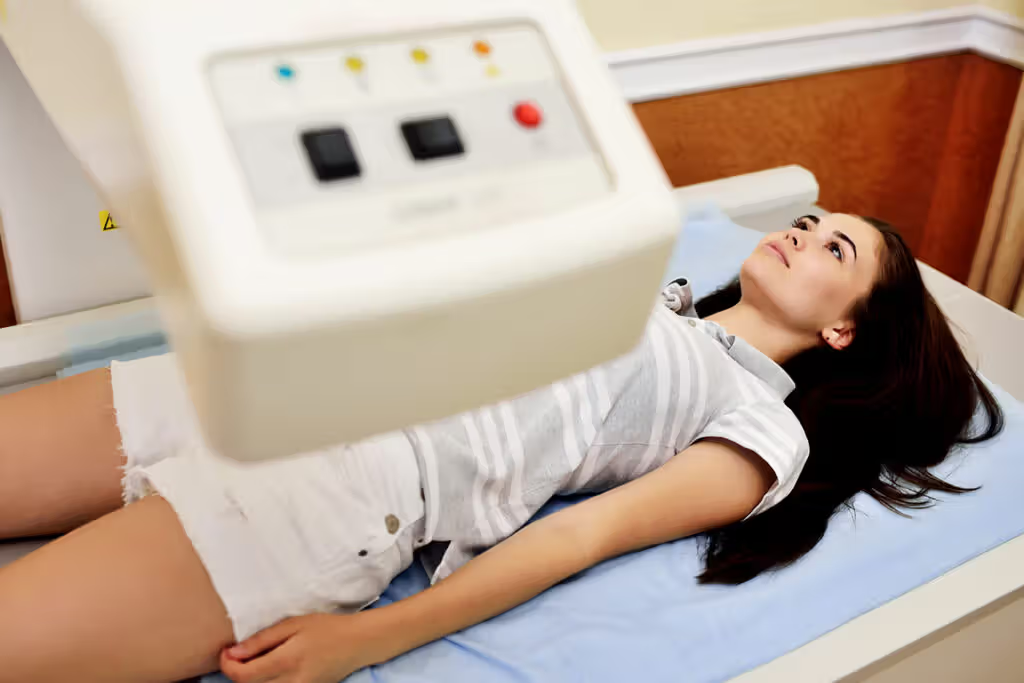
During a Dexa scan, the patient lies on a flat table while a scanning arm passes over specific parts of the body, usually the hip and spine. The machine measures how much calcium and other minerals are present in the bones, which helps determine how strong or weak they are. The results are typically given as a score that doctors use to evaluate bone health and fracture risk.
Recommended: DEXA Scan vs Standard Bone Density Test
Doctors usually recommend dexa scans for older adults, especially women who have gone through menopause, and people who have risk factors like long-term steroid use, a history of fractures, or certain medical conditions that affect bone health. The scan gives useful information about bones, but it is not meant to find diseases like cancer or problems with soft tissue.
Understanding Cancer Detection
Cancer detection is the process of identifying abnormal and uncontrolled cell growth in the body, often at an early stage before it spreads. Detecting cancer early is one of the most important factors in improving treatment success and survival rates. Because cancer can develop in different parts of the body and behave in various ways, no single test can detect all types of cancer. Instead, healthcare providers rely on a combination of methods to accurately identify and confirm the disease.
Why Early Detection Matters
Early detection plays a crucial role in cancer management. When cancer is found early, it is often smaller, less aggressive, and easier to treat. Some key benefits of early detection include:
- Higher chances of successful treatment
- Reduced need for aggressive therapies
- Lower risk of cancer spreading to other parts of the body
- Improved quality of life and survival rates
Common Methods Used in Cancer Detection
Cancer detection involves several approaches, each designed for specific purposes. These methods work together to provide a clearer picture of what is happening inside the body.
Imaging Tests
Doctors can use imaging tests to look inside the body and find abnormal growths or structures. These are some of the most common tools used to find cancer:
- X rays are useful for detecting abnormalities in bones and certain organs
- CT scans provide detailed cross sectional images of the body
- MRI scans offer high resolution images of soft tissues such as the brain and muscles
- PET scans detect areas of high metabolic activity, which may indicate cancer
- Ultrasound uses sound waves to visualize organs and detect masses
These imaging techniques are specifically designed to identify tumors or suspicious changes, unlike Dexa scans which focus only on bone density.
Recommended: Strength Training for Seniors With Medical Supervision
Laboratory Tests
Laboratory tests analyze blood, urine, or other body fluids to look for signs of cancer. While they cannot always confirm cancer on their own, they can provide important clues. Examples include:
- Blood tests to detect abnormal cell counts
- Tumor markers, which are substances produced by cancer cells
- Liver and kidney function tests to assess organ health
Screening Tests
Screening tests are used to detect cancer in people who do not yet have symptoms. These tests are very important for people who are more likely to get sick. Common screening methods include:
- Mammograms for breast cancer
- Pap smears for cervical cancer
- Colonoscopy for colorectal cancer
- Prostate specific antigen testing for prostate cancer
Biopsy and Histological Examination

The best way to find out if you have cancer is to have a biopsy. It means taking a small piece of tissue out of the body and looking at it under a microscope. This method helps to find out if there are cancer cells, what kind of cancer it is, and how aggressive it is.
Can Dexa Scans Detect Cancer?
Dexa scans cannot detect cancer and are not designed for that purpose. Their primary function is to measure bone mineral density and assess bone strength, particularly in diagnosing conditions like osteoporosis. Dexa scans do not show detailed pictures of tissues or find abnormal growths like tumours, unlike imaging tests like CT scans or MRI scans.
However, in rare cases, a Dexa scan may show unusual findings in the bones, such as unexpected changes in density. These findings are not a diagnosis of cancer but may raise concern and prompt further medical evaluation. For example, certain cancers that spread to the bones, known as bone metastases, can alter bone density. Even in such situations, a Dexa scan alone cannot confirm the presence of cancer.
Recommended: How to Maintain Muscle Mass on GLP-1 Medications
It is important to understand that Dexa scans have significant limitations when it comes to detecting diseases beyond bone health. They do not capture detailed images of soft tissues, organs, or small lesions, which are often necessary for identifying cancer. Because of this, relying on a Dexa scan to detect cancer can lead to missed or inaccurate conclusions.
If cancer is suspected, doctors will recommend more appropriate diagnostic tools such as CT scans, MRI scans, PET scans, or biopsies. These methods are specifically designed to detect and evaluate cancer, providing clearer and more reliable results.
Risks and Limitations of Dexa Scans
Dexa scans are considered safe, quick, and non invasive, making them a widely used tool for assessing bone health. However, like any medical test, they come with certain risks and limitations. Understanding these helps set realistic expectations and prevents misinterpretation of results, especially when considering conditions such as cancer.
Risks of Dexa Scans
Although the risks are minimal, they are still important to be aware of:
- Low level radiation exposure: Dexa scans use a small amount of X-ray radiation. Even though the dose is very low compared to other imaging tests, repeated exposure over time should still be thought about, especially for people who are more likely to be harmed, like pregnant women.
- Not suitable during pregnancy: Because of the use of radiation, Dexa scans are generally avoided during pregnancy unless absolutely necessary.
- Potential for slight measurement variation: Results can sometimes vary slightly depending on the machine used or patient positioning, which may affect accuracy if not done consistently.
Limitations of Dexa Scans
Dexa scans have several important limitations, particularly when it comes to diagnosing conditions beyond bone health:
- Cannot detect cancer: Dexa scans are not designed to identify tumors or abnormal cell growth. They only measure bone mineral density, which means they cannot diagnose or rule out cancer.
- Limited to bone assessment: The scan focuses mainly on bones such as the spine and hips. It does not provide detailed images of soft tissues, organs, or other structures where cancer often develops.
- May miss underlying conditions: Certain diseases, including early stage bone cancers or metastases, may not significantly affect bone density and therefore may not be detected by a Dexa scan.
- Risk of misinterpretation: Abnormal results, such as unusually high or low bone density, may sometimes be mistaken for other conditions. This can lead to unnecessary worry or the need for additional testing.
- Not a comprehensive diagnostic tool: Dexa scans are designed for a specific purpose and cannot replace more advanced imaging techniques like CT scans or MRI scans when a broader diagnosis is needed.
Recommended: What to Expect During a Hyperbaric Oxygen Therapy (HBOT) Session
What Dexa Cannot Detect
While Dexa scans are highly effective for assessing bone health, they have significant limitations and cannot detect certain conditions. Understanding what a Dexa scan cannot identify helps prevent misunderstandings and ensures patients receive the appropriate tests for their health concerns.
1. Cancer

Dexa scans cannot detect cancer. They are designed to measure bone mineral density, not to identify tumors, abnormal cell growth, or cancers in bones or other tissues. Even if a bone is affected by cancer, a Dexa scan alone cannot confirm its presence.
2. Soft Tissue Abnormalities
Dexa scans do not provide detailed images of soft tissues, such as muscles, organs, or connective tissue. This means conditions affecting the liver, kidneys, lungs, or other organs cannot be detected through a Dexa scan.
3. Internal Organ Diseases
A Dexa scan does not show diseases like liver disease, kidney disease, heart problems, or lung infections. To get the right diagnosis, these conditions need other imaging tests or lab tests.
4. Small Bone Lesions or Early Bone Cancer
Early-stage bone cancers or very small lesions may not significantly affect bone density, so a Dexa scan may not detect them. Other imaging tests like MRI or CT scans are needed to identify these abnormalities.
Recommended: Is BMI a Reliable Indicator of Health? Pros and Cons
5. Inflammatory Conditions
Arthritis, infections in bones or joints, and other inflammatory conditions are generally not detected by Dexa scans. These require specialized imaging or lab tests for proper evaluation.
6. Fracture Details
While Dexa scans indicate bone strength and fracture risk, they cannot show existing fractures in detail. X rays or CT scans are needed to confirm fractures or their severity.
Conclusion
Dexa scans are a valuable and safe tool for evaluating bone health, measuring bone mineral density, and assessing the risk of osteoporosis and fractures. They provide essential information that helps doctors make informed decisions about treatment and preventive care for patients at risk of weakened bones.
However, it is important to understand their limitations. Dexa scans cannot detect cancer, soft tissue abnormalities, organ diseases, small bone lesions, or inflammatory conditions. They are not meant to be used for full diagnostics, and you shouldn ot rely on them to find serious health problems other than low bone density.
For detecting cancer or other medical concerns, doctors use more specialized tests such as CT scans, MRI scans, PET scans, blood tests, and biopsies. While Dexa scans may occasionally reveal unusual bone findings that require further investigation, they are primarily focused on bone strength and health.